NERSA SSEG Registration: How to Legally Register Your Business Solar System in South Africa
Published: March 2026 | Category: Compliance & Regulation
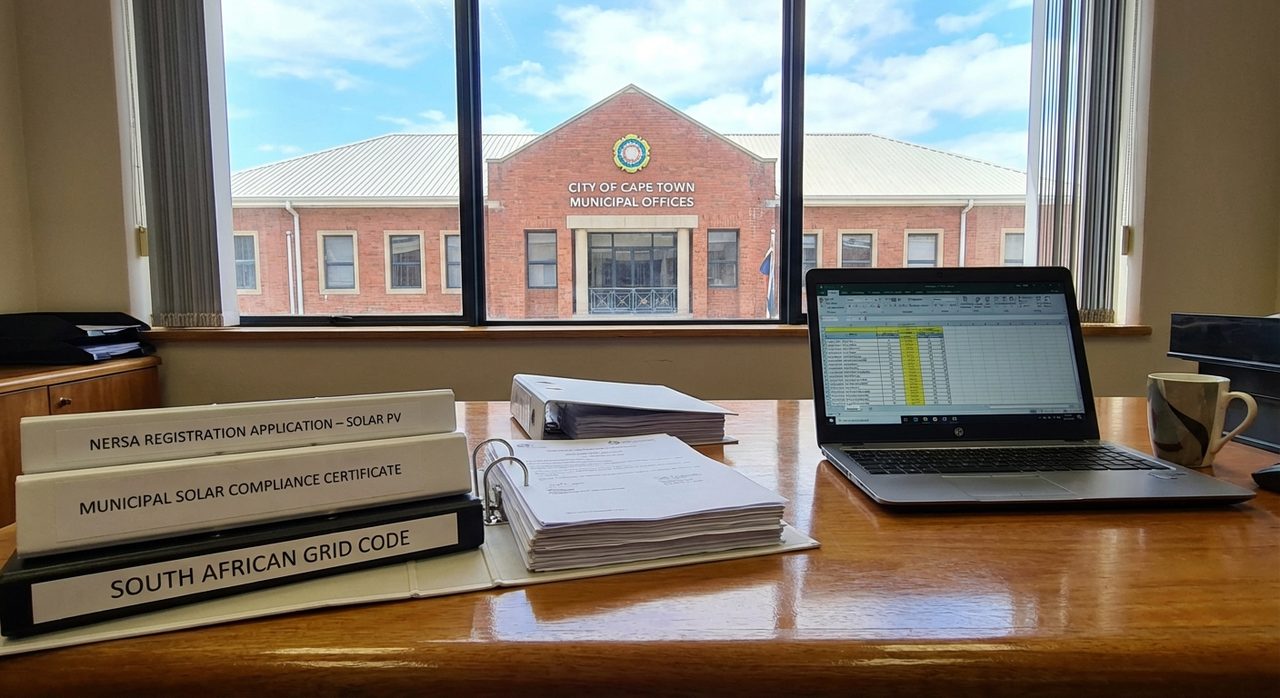
Thousands of South African businesses install solar panels every year. Many of them get the panels, inverter, and batteries right — and then completely ignore the legal registration requirements. The result: an insurance policy that may not pay out after a fire, a municipality that can order your system disconnected, and potential liability for damage to the grid.
Registering a commercial solar system in South Africa is not complicated, but it requires navigating a framework that most installers understand only partially. This guide covers everything you need to know about the Small Scale Embedded Generation (SSEG) framework, NERSA's role, and what your specific municipality requires.
Understanding the Regulatory Framework
South Africa's small-scale solar regulation sits within a layered framework:
- NERSA (National Energy Regulator of SA) — Sets the rules for SSEG through its Registration and Licencing framework. For systems under 1MW connected to a distribution grid, NERSA delegates registration to the relevant licensed distributor — usually the municipality.
- Your Municipality (or Eskom Direct) — Is the licensed electricity distributor for most urban and peri-urban areas. The municipality administers SSEG registration, sets its own additional requirements, and manages the grid interconnection process.
- Department of Mineral Resources and Energy (DMRE) — For systems above 1MW, a generation licence from DMRE/NERSA is required before construction.
For most commercial solar installations (10kWp to 500kWp), the key relationship is between you, your installer, and your municipality. NERSA is the rule-setter in the background.
When Do You Need SSEG Registration?
You need to register as an SSEG if your solar system is connected to the municipal grid — even if you have no intention of exporting power. This includes:
- Grid-tied solar systems with no batteries
- Hybrid systems where the inverter can export to the grid
- Systems where the inverter has anti-islanding protection but can theoretically back-feed
You do not need SSEG registration for:
- Completely off-grid systems with no physical connection to the municipal grid
- Systems using a grid-isolation (manual transfer) switch that physically disconnects from the grid before the inverter activates
However, even fully off-grid systems require an electrical Certificate of Compliance (CoC) issued by a registered electrical contractor for any work done on your premises.
The SSEG Application Process (Step by Step)
The process varies by municipality, but the general sequence is consistent. Your installer should handle most of this, but you need to understand what is happening and why delays occur.
Step 1: Pre-Application (Before Installation)
Before your installer orders equipment, submit a pre-application or intention-to-connect notice to your municipality's electricity department. Most municipalities require this before you proceed. Some (Cape Town, for example) will not accept a post-installation SSEG application.
The pre-application typically includes:
- Your account number and property details
- Proposed system size (kWp DC) and inverter capacity (kVA AC)
- Whether you intend to export to the grid
- Site plan showing panel locations
Step 2: Municipality Review
The municipality checks your proposed connection size against the local substation capacity. In areas with high solar penetration (parts of Cape Town, some Johannesburg suburbs), substations can be at capacity, and new grid-export connections may be refused or delayed. Pure consumption systems (no export) are typically approved faster.
Step 3: Installation
The physical installation proceeds. A SAPVIA-accredited or registered electrical contractor must carry out all electrical work. The installer must use inverters on the municipality's approved inverter list — if your installer quotes a brand not on this list, the application will be rejected.
Step 4: Electrical Certificate of Compliance (CoC)
Once installation is complete, the electrical contractor issues a CoC for the solar installation. This is separate from any existing property CoC and covers the new solar wiring and switchgear.
Step 5: SSEG Registration Application
Submit the full application to the municipality with all supporting documents. This typically includes:
- Completed SSEG application form
- Electrical Certificate of Compliance
- Approved inverter specifications
- Single-line diagram of the electrical installation
- Proof of anti-islanding protection (relay settings or inverter certification)
- Panel and battery technical datasheets
- Municipal account details
Step 6: Smart Meter Installation
For grid-export systems, the municipality will replace your existing meter with a bidirectional smart meter that records both import and export. This can add 4–12 weeks to the process depending on meter stock and scheduling. You must not export to the grid before the smart meter is installed.
Step 7: Connection Approval Letter
The municipality issues a final approval letter confirming your system is legally registered. Keep this document. You'll need it if you sell the property or if the municipality conducts compliance audits.
Municipality-Specific Requirements
South Africa's eight metropolitan municipalities each have their own SSEG application forms, approved inverter lists, and processing times. Here is a summary as of early 2026:
City of Cape Town
Cape Town has the most mature SSEG programme in South Africa. The process is online via their Energy and Climate Change portal. They have a feed-in tariff (buy-back tariff) for export. Processing time: 4–8 weeks for straightforward applications. Approved inverter list is updated quarterly.
City of Johannesburg (City Power)
City Power uses the Small-Scale Embedded Generation Registration process. Application forms are submitted physically to the City Power offices. Processing times are 6–12 weeks. City Power does not currently have a universal feed-in tariff programme — some pilot schemes exist.
Ekurhuleni
Ekurhuleni's SSEG process is administered through their Energy Department. Processing times have historically been long (3–6 months). The municipality has been working to streamline the process. No standard feed-in tariff as of early 2026.
City of Tshwane
Tshwane follows the NERSA SSEG framework with applications to their Energy Division. Processing: 8–16 weeks. A net metering/buy-back programme was under review in 2025 but had not been finalised as of early 2026.
Eskom Direct Supply Areas
Businesses in areas supplied directly by Eskom (not through a municipality) register directly with Eskom using the NRS 097-2-3 standard for SSEG connection. Eskom's SSEG team handles these applications. The process can take 3–9 months for systems above 25kVA.
What Happens If You Don't Register?
Operating an unregistered grid-connected solar system in South Africa carries real risks that many installers downplay:
- Insurance void: Your business insurance may refuse a claim for fire damage if the cause is attributed to an unregistered electrical installation.
- Municipality disconnection: Municipalities have the right to disconnect your supply if you are found operating an unregistered grid-connected generation system.
- Liability for grid damage: If your unregistered inverter causes a grid fault or damages a neighbour's equipment through uncontrolled export, you can be held personally liable.
- Property sale complications: An unregistered system can complicate property sale due diligence and may need to be disclosed or deregistered at your cost.
- Tax deduction risk: The Section 12B accelerated depreciation deduction on solar assets could be challenged by SARS if the installation is not legally compliant.
The Section 12B Tax Connection
South Africa's Section 12B of the Income Tax Act provides an accelerated depreciation deduction for solar generation assets. For qualifying solar systems, businesses can deduct 125% of the cost in the first year (Section 12B(h) as amended in 2023). This deduction requires the system to be used for trade and to be a legitimate installation — which means compliant and registered.
SARS audits of Section 12B claims are increasing. A well-documented, registered installation with CoC, SSEG approval letter, and proper invoicing will withstand scrutiny. An undocumented, unregistered system carries tax risk alongside the physical risks above.
Choosing an Installer Who Handles Compliance
Not all solar installers handle SSEG registration. Some install the system and leave the compliance to you. When comparing quotes, ask specifically:
- Is SSEG registration included in the quote?
- Who submits the application and tracks it with the municipality?
- Who is responsible for the CoC?
- Have you installed systems on [municipality]'s approved inverter list?
- What is the realistic current processing time with our municipality?
A reputable installer will handle the full compliance process as part of the installation package. If registration is not in the quote, negotiate to include it — or budget separately for a compliance specialist to manage it.
Conclusion: Compliance Is Not Optional
The SSEG registration process in South Africa can be frustratingly slow, but it is not optional for grid-connected systems. The legal, insurance, and tax risks of operating an unregistered installation outweigh the inconvenience of waiting for approval.
Start the pre-application process before your installer orders equipment. Use a SAPVIA-accredited installer who works with inverters on your municipality's approved list. Keep all documentation — the CoC, the approval letter, the single-line diagram — filed safely. These documents follow the system for its 25-year life.
Done properly, a fully compliant solar installation in South Africa is a clean, bankable asset that maximises your tax benefits, protects your insurance cover, and can be transferred seamlessly if you sell the property.